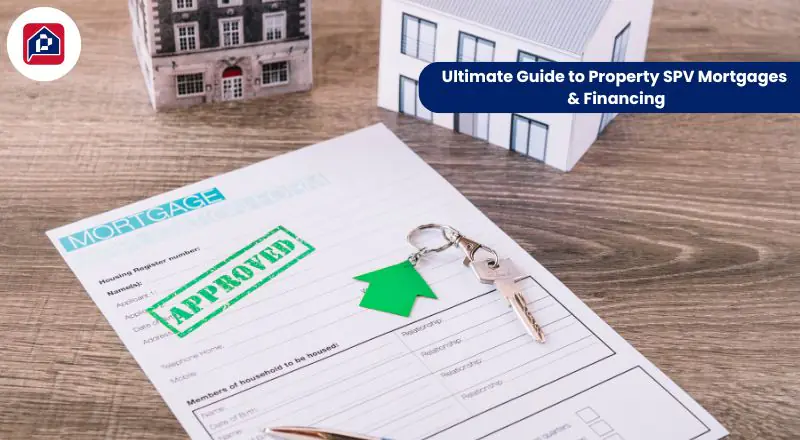
An SPV mortgage, also called a limited company buy-to-let mortgage, is a mortgage taken out by a Special Purpose Vehicle (SPV) instead of an individual. The SPV is a private limited company registered at Companies House. Its only purpose is to buy, hold, and manage investment property. The mortgage is in the company’s name. The company owns the property, and you own the company through its shares.
This differs from a personal buy-to-let mortgage, where you own the property in your own name. With an SPV mortgage, all rental income goes to the company. The company pays corporation tax on profits. You take out money as dividends or salary.
Buying property through a limited company changes how tax, ownership, and mortgage financing all work together, which is why it’s worth understanding the wider structure before applying for an SPV mortgage specifically.
Property SPVs usually register with SIC code 68100 (buying and selling own real estate) or 68209 (other letting and operating of own or leased real estate). Using the correct SIC code is essential. Most SPV mortgage lenders require it as a condition of lending.
Why SPV mortgages have surged in 2026 — the Section 24 effect
Since 2016, the number of limited company buy-to-let mortgages has grown sharply. This change began when Section 24 of the Finance (No. 2) Act 2015 introduced restrictions on mortgage interest relief for individual landlords. By 2024, most new buy-to-let mortgage applications in the UK were made by limited companies.
The reason is straightforward. Under Section 24 mortgage interest relief, individual landlords cannot fully deduct mortgage interest from rental income before calculating tax. Instead, they get only a 20% basic-rate tax credit. Higher-rate taxpayers paying 40% income tax repay tax on income not actually received. This tax is based on gross rent rather than net profit.
SPVs are outside the scope of mortgage interest restriction under section 24 entirely, because that restriction applies only to individuals. Companies are instead subject to corporation tax on property profits and may deduct mortgage interest as a business expense in full.
In 2026, rates are:
- 19% on augmented profits up to £50,000 (small profits rate)
- 25% on augmented profits above £250,000
- Marginal relief applies between these thresholds
For a higher-rate landlord with big mortgage costs, paying 40–45% income tax under Section 24 versus 19–25% corporation tax through an SPV is a significant difference. This gap can add up to thousands of pounds per property each year.
Income tax thresholds are frozen until 2031/32. As rents rise, more landlords will move into higher tax bands even if the rate does not change. For those planning to grow a portfolio, setting up an SPV at the start is usually the most tax-efficient way, rather than transferring later.
Important
Speak to a qualified chartered tax adviser before changing your property holding structure. Corporation tax, SDLT, CGT, and inheritance tax interact in complex ways, depending on your specific case.
Step by Step on How SPV Mortgage Works
Incorporate the SPV
Register a private limited company at Companies House with the correct SIC code. The company must have at least one director, one shareholder, a registered office address, and Articles of Association. Most lenders require the company to be incorporated before you apply, not on the same day.
Fund the SPV
Investors put capital into the SPV via share subscriptions or director loans. This serves as the company’s deposit and initial working funds.
Apply for the SPV mortgage
The SPV applies for a buy-to-let mortgage in the company’s name. Lenders check the property’s rental income coverage ratio (ICR), the company’s SIC code, the directors’ personal credit, and the Shareholding Structure
Provide personal guarantees
Most SPV mortgage lenders require all directors and shareholders to sign personal guarantees. If the company defaults, guarantors are personally liable. This is a key difference from a standard limited company loan.
Purchase the property
Once you have the mortgage offer, the SPV buys the property. The property title is registered in the company's name at HM Land Registry, not in yours.
Collect rental income through the SPV
All rental income goes into the company’s bank account. The SPV pays the mortgage, covers costs, and makes a profit from this income. Corporation tax is paid on the profit. The rest can be taken as dividends or salary.
SPV mortgage lender requirements in 2026
SPV mortgage lenders apply stricter criteria than personal buy-to-let lenders. Review these requirements before applying to avoid rejections and unnecessary credit checks.
SIC code
The SPV must be registered under property SIC codes (68100 or 68209). Trading company SIC codes are not acceptable to most lenders. Using an incorrect SIC code can result in an automatic decline.
Most lenders accept up to four directors and four shareholders. All directors and major shareholders (usually 25% or more) will have their credit checked. Non-standard structures, such as non-voting shares, child shareholders, or overseas shareholders, are subject to additional review.
Personal guarantees
Required by almost all SPV mortgage lenders. The guarantee is typically unlimited unless specifically negotiated otherwise.
Many lenders prefer experienced landlords. Some will consider first-time landlords with a bigger deposit or higher income, but there are fewer options.
Most SPV mortgage lenders set a maximum loan-to-value of 75%, so you need a 25% deposit. Some want 30–35% for higher-risk properties or first-time landlords.
Lenders need
Lenders want rental income to cover the mortgage at a stressed rate of 125% to 145%. The exact ICR and stress rates depend on the lender. For a basic-rate SPV, some lenders use a lower ICR than for higher-rate taxpayers.
Some lenders require directors to have a minimum personal income, often £25,000. Others do not. Rules differ widely between lenders.
Many lenders require the company to be incorporated before the application, not on the same day.
Standard residential properties, HMOs, and multi-unit freehold blocks can use SPV mortgages. HMOs and MUFBs need specialist lenders, and each has different criteria. Non-standard construction properties significantly limit lenders’ choices.
SPV mortgage rates and costs: what to expect
SPV mortgage rates in 2026 are usually 0.5% to 1% higher than personal buy-to-let rates. The difference has narrowed over the past two years as the market has matured and competition has increased.
With a Bank of England base rate of 3.75% in early 2026, five-year fixed-rate SPV buy-to-let products from specialist lenders are 4.5%–5.5%, depending on LTV and application strength. Tracker products are also available at a margin above the base rate for investors comfortable with rate changes.
Typical cost summary for an SPV mortgage application:
Typical SPV mortgage costs
One-off and ongoing costs to factor into your budget — UK 2026
| Cost | Typical range |
|---|---|
| Mortgage arrangement fee Charged by the lender on completion | £1,000 – £2,500 |
| Valuation fee Lender's survey of the property | £300 – £600 |
| Legal fees (company purchase) Solicitor acting for the SPV | £1,500 – £3,000 |
| Broker fee (if applicable) Specialist SPV mortgage broker | £500 – £1,500 |
| Annual accountancy Accounts, CT600, confirmation statement filing | £500 – £1,500 /yr |
| Companies House confirmation statement Annual statutory filing requirement | £50 /yr (online, since 1 February 2026) |
Note
Costs are indicative ranges for a standard single-property residential SPV in England, 2026. Legal fees vary by property value and complexity. SDLT is payable separately on the property purchase.
A specialist SPV mortgage broker who covers the full market offers more products and lender options than a single lender. This matters for non-standard applications.
Advantages and Disadvantages of an SPV mortgage
Advantages of an SPV mortgage
Six key benefits for UK property investors in 2026
- Full mortgage interest deduction Tax benefit An SPV can deduct 100% of mortgage interest as a business expense. Individual landlords restricted by Section 24 cannot do this. For heavily mortgaged portfolios, this alone can save thousands of pounds per year.
- Lower tax on rental profits Tax benefit Corporation tax at 19–25% is significantly lower than income tax at 40–45% for higher and additional-rate taxpayers — a meaningful saving on the same rental profit.
19% on profits up to £50,000 · 25% on profits above £250,000 - Limited liability Protection Your personal assets are protected from the company's debts. Only the SPV's assets are at risk if it faces financial difficulty — though personal guarantees still apply for most SPV mortgage lenders.
- Portfolio scalability Growth Hold many properties within one SPV or use several SPVs. The company structure makes it easier to attract investors, issue shares, and track each asset's performance separately.
- Inheritance planning Succession Instead of transferring property deeds — which can trigger SDLT and CGT — you can transfer SPV shares. This may help with inheritance planning, though the tax treatment of shares depends on your specific circumstances and professional advice is essential.
- MTD ITSA exemption Compliance From April 2026, landlords with qualifying income above £50,000 must use Making Tax Digital for Income Tax. Holding property through an SPV means income and tax are managed under corporation tax rules, not MTD ITSA.
Disadvantages and risks of an SPV mortgage
Six risks to weigh before proceeding
- Higher mortgage rates Cost SPV mortgage rates are typically 0.5%–1% higher than personal buy-to-let products. Over a 25-year mortgage, even a 0.75% rate premium adds meaningfully to total interest paid.
- Narrower lender choice Restriction There are fewer lenders offering SPV mortgages than personal buy-to-let products, and fewer products per lender. Unusual properties or complex shareholding structures restrict your options further.
- Personal guarantees required Liability Most SPV mortgage lenders require personal guarantees from all directors and major shareholders. This limits the liability protection the SPV structure would otherwise provide.
- Ongoing compliance costs Admin A limited company must file annual accounts, a corporation tax return, and a confirmation statement every year. Professional accountancy fees typically run £500–£1,500 per year for a single-property SPV.
- SDLT on property transfers Tax cost If you already own property personally and want to move it into an SPV, the transfer is treated as a sale at market value. SDLT is payable — including the 5% additional dwelling surcharge in 2026 — plus potentially CGT on any accrued gain.
The SPV route works best for new purchases — not existing portfolio transfers. - Profit extraction costs Tax cost Profits in the SPV are subject to corporation tax. Extracting them as dividends means paying dividend tax on top: 10.75% (basic rate), 35.75% (higher rate), or 39.35% (additional rate) in 2026/27. Salary extraction is subject to income tax and National Insurance. Tax savings at company level must be weighed against extraction costs.
SDLT and tax considerations when buying through an SPV in 2026
SDLT on purchase
When an SPV purchases residential property, it pays SDLT at the standard rates plus the 5% higher rates surcharge for additional dwellings (applicable from April 2025). On a £300,000 residential purchase, this results in materially higher SDLT than a first-time buyer would pay personally.
SDLT on share purchase
Purchasing shares in an existing property-owning SPV attracts only 0.5% stamp duty on the share value, not the property value. This is one reason why investors sometimes structure portfolio transactions as SPV share sales rather than direct property transfers. However, HMRC anti-avoidance provisions apply if the structure exists mainly to avoid SDLT.
Non-natural persons flat rate
Certain corporate purchases of a single dwelling valued at over £500,000 may fall within the 17% flat SDLT rate for non-natural persons, unless a relief applies (such as the property rental business relief). This is a significant SDLT trap and should be checked before any purchase in this value range.
Corporation tax on rental profit
All net rental income, after deductible expenses including full mortgage interest, is subject to corporation tax at 19–25%.
CGT on disposal
If the SPV sells a property, the gain is subject to corporation tax rather than personal CGT. The company does not benefit from the annual CGT exemption available to individuals.
All SDLT calculations above are based on 2026 rates. Rates are subject to change. Confirm current rates with a chartered tax adviser before the exchange of contracts.
Who can get an SPV mortgage?
SPV mortgages are available to:
- Experienced buy-to-let landlords looking to structure further purchases through a limited company.
- New landlords starting with a company structure from day one (accepted by a growing number of lenders)
- Portfolio landlords (four or more mortgaged properties) who may find the SPV structure simplifies lender reporting.
- Joint investors: two to four partners incorporating an SPV together
- Overseas investors: Non-UK residents can set up and direct a UK SPV, though the number of lenders willing to lend to companies with overseas directors is smaller, and additional due diligence is required.
You must be at least 21 years old. Most lenders require at least one director to have a minimum income (commonly £25,000, though this varies). A good personal credit history across all directors is important.
How to set up an SPV ready for a mortgage application
Getting the company structure right before you apply is one of the most overlooked parts of the SPV mortgage process. A poorly incorporated SPV, such as using the wrong SIC code, the wrong shareholding structure, or Articles of Association that do not match lender requirements, can delay or block a mortgage application entirely.
The key steps are:
- Choose the right SIC code: 68100 or 68209 for most buy-to-let SPVs. Confirm with your intended lender before incorporating.
- Set up the shareholding structure: Decide who owns shares and in what proportions. If you want to use multiple share classes for tax planning or investor participation, make sure the Articles of Association support this from the start.
- Draft bespoke Articles of Association: Standard model Articles do not always include provisions for multiple share classes, specific dividend rights, or the type of share structure lenders expect.
- Open a dedicated company bank account: Required for all mortgage applications and company operations.
- Register your company correctly: Companies House registration must be completed and confirmed before most lenders will progress an application.
PropertySPV provides a complete SPV formation service that covers each of these steps, including bespoke Articles of Association and Companies House filing, so your company is mortgage-ready from day one.
Set up your mortgage-ready SPV
FAQs
What is the difference between an SPV mortgage and a regular buy-to-let mortgage?
Do I need a personal guarantee for an SPV mortgage?
Can a first-time landlord get an SPV mortgage?
What SIC code does my SPV need for a mortgage?
Can I transfer my existing properties into an SPV?
How many directors can an SPV have for a mortgage?
This article provides general information about SPV mortgages in the UK. It does not constitute financial or tax advice. Tax rates, SDLT rates, and lender criteria are correct as at June 2026 but are subject to change. Always consult a qualified chartered tax adviser and specialist mortgage broker before making property investment decisions.